
SFB 1280 Showing Faces

RUBIN
Rubin, das Wissenschaftsmagazin der Ruhr-Universität Bochum, widmet sich in seiner neuen Ausgabe ganz der Arbeit des SFB 1280. Eine Sonderausgabe nur zum Extinktionslernen! Auf 64 Seiten porträtiert das Projekt unser Team, die Forschungsarbeit und die Hintergründe des Phänomens Extinktionslernen. Wir freuen uns und danken der Ruhr-Universität für diese seltene Gelegenheit, sich auf vielen Seiten und mit viel Zeit übrigens auch wunderbar bebildert zu präsentieren und der Öffentlichkeit zu zeigen, wer wir sind und was wir im SFB 1280 erforschen.
Das Magazin als PDF findet sich hier: >>
Rubin, the science magazine of Ruhr-Universität Bochum, dedicates its new issue entirely to the work of the SFB 1280. A special issue just for extinction learning! On 64 pages, the project portrays our team, the research work and the background to the phenomenon of extinction learning. We are pleased and thank the Ruhr-Universität for this rare opportunity to present ourselves on many pages and with a lot of time, by the way, also wonderfully illustrated, and to show the public who we are and what we are researching in the SFB 1280.
Find the magazine as PDF here: >>
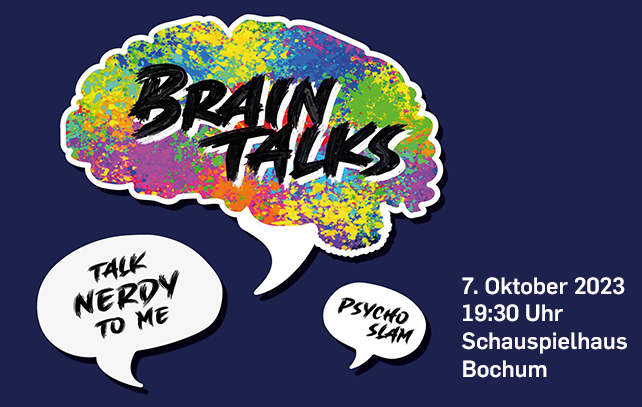
BRAINTALKS
Ein abendfüllendes Bühnenprogramm in einem der renommiertesten und international bekanntesten deutschen Theater – mit unserer Wissenschaft auf der großen Bühne.
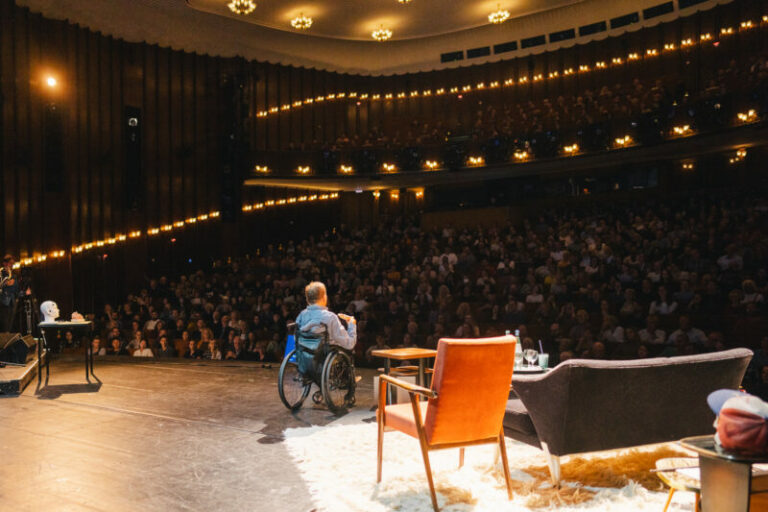
Die Braintalks fanden im gefüllten Schauspielhaus Bochum statt. Auf der Bühne SFB-Sprecher Onur Güntürkün und vier Early Career Researcher des SFB 1280, dazu die Liveband Alma Sunshine. Und im Publikum knapp 800 Menschen, die sich für die Forschung des SFB interessierten.
Mehr Infos sowie Impressionen vom Abend finden sich hier: >>
Als Video lässt sich der Abend hier nach erleben: >>
A full-length stage program in one of the most renowned and internationally known German theaters – with our science on the big stage.
The Braintalks took place in the packed Schauspielhaus Bochum. On stage SFB 1280 speaker Onur Güntürkün and four Early Career Researchers of the SFB 1280, plus the live band Alma Sunshine. And in the audience nearly 800 people interested in the SFB’s research.

Kannste Vergessen?
Lernen ist schwer. Vergessen ist manchmal noch schwerer. Wie wird man Gelerntes wieder los? Das möchte Rainer Holl, Autor, Moderator und Poetry Slammer, wissen und verstehen. Dazu interviewt er Wissenschaftlerinnen und Wissenschaftler des SFB 1280 zu ihrer Forschung. Mit mittlerweile drei Staffeln hat „Kannste Vergessen?“ wirklich eine Episode für jede:n im Angebot. Was bedeutet Glück? Was können wir aus den Geschichten die Menschen erzählen lernen? Wie behandelt man Höhenangst? Und vieles mehr …
Alle Podcast-Episoden finden sich hier oder auf ihrer liebsten Streamingplattform: >>
Learning is hard. Forgetting is sometimes even harder. How do you get rid of what you’ve learned? That’s what Rainer Holl, author, moderator and poetry slammer, wants to know and understand. To find out, he interviews scientists from the SFB 1280 about their research. With three seasons now, “Kannste Vergessen?” really does have an episode for everyone. What does happiness mean? What can we learn from the stories people tell? How do you treat fear of heights? And much more …
All podcast episodes can be found here or on your favorite streaming platform: >>
(Please be aware that the podcast is only available in German.)

eigen.regie
„eigen.regie – Ein Abend wegen und gegen Einsamkeit“ war ein Bühnengespräch mit Menschen, die durch ihre Arbeit, ihren persönlichen Einsatz und ihr Erleben mit dem Thema konfrontiert sind. Weil sie es wissenschaftlich erforschen, politisch lösen möchten, es durch Engagement erträglicher machen oder medial und künstlerisch problematisieren. Bei eigen.regie sprachen so Protagonist:innen aus Wissenschaft, Kultur, Sport, Journalismus und sozialem Ehrenamt über Einsamkeit als Problem und seine Lösbarkeit – unterhaltsam und doch dem Ernst des Themas angemessen.
Mehr Infos sowie Impressionen vom Abend finden sich hier: >>
Als Video lässt sich der Abend hier nach erleben: >>
“eigen.regie – An evening because of and against loneliness” was a stage discussion with people who are confronted with the topic through their work, their personal commitment and their experiences. Because they want to research it scientifically, solve it politically, make it more bearable through commitment or problematize it in the media and artistically. At eigen.regie, protagonists from the fields of science, culture, sport, journalism and social volunteering spoke about loneliness as a problem and how it can be solved – in an entertaining way and yet appropriate to the seriousness of the topic.
New Year, New Me: The Facts
As the calendar turns to a new year, millions of people around the world commit to New Year’s resolutions, making promises to use the new year as a fresh beginning and an opportunity for transformation. In 2024, almost three-quarters of the British population set themselves New Year’s resolutions — that’s around 40 million people (or the entire population of Canada). This tradition was particularly strong among younger generations, with 96% of Generation Z (aged 18-27) planning resolutions, compared to just 35% of the Silent Generation (aged 79+).
Most common new years resolutions:
- Saving more money (52%)
- Eat healthier (50%)
- Exercise more (48%)
- Lose weight (37%)
- Spend more time with family/friends (35%)
How long do most resolutions normally last before being broken?
- Data from America (2016) shows that 75% of individuals maintain their resolutions through the first week.
- 64% of individuals maintain their resolutions through the first month.
- 46% of individuals in America keep their resolutions past the 6-month mark.
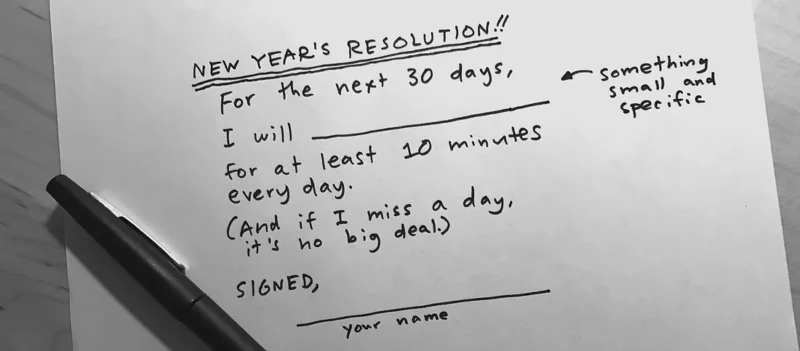
What makes resolutions stick?
Oscarsson et al. (2020) conducted research into what makes New Year’s resolutions stick. Biggest success rates depended on how people phrased their goals. Participants who set approach-oriented goals (trying to move toward or maintain a desirable outcome or state) than those with avoidance-oriented goals (trying to move toward or maintain a desirable outcome or state) were significantly more successful (58.9% vs. 47.1%) at sticking to their goals.
The study also investigates the effects of outside support. These participants received monthly follow-ups and emails with information and exercises for coping with hurdles when striving toward personal goals, and were also encouraged to set goals using the SMART technique and to set interim goals. The group that received some support was exclusively and significantly more successful compared to the groups who received a lot of support or no support at all.
Additionally, you might feel more successful if you set goals that are measurable in numbers. While success for a person striving to quit smoking or lose weight could easily be measured in the number of cigarettes smoked or body mass index, the success for a person striving to „take better care of themselves“ could be highly subjective and possibly impossible to measure.
So as we enter 2026, let’s remember to work with our brain’s natural learning system: Frame your goals positively, break them into manageable steps, and celebrate small wins along the way.