In diesem Teilprojekt wird der Schwerpunkt auf der neurophysiologischen Basis des Extinktionslernens liegen, vor allem auf den (sub)zellulären Ebenen der Kodierung und Verarbeitung innerhalb neuronaler Populationen. Wir werden elektrophysiologische Verfahren verwenden, um die neuronalen Mechanismen und Signaturen des Erwerbs, der Extinktion und der Reaktivierung einer erlernten Aufgabe im Nagergehirn zu identifizieren. In erster Linie wird der Hippokampus untersucht, aber dessen Interaktion mit anderen für das Extinktionslernen relevanten Hirnstrukturen wie z.B. dem präfrontalen Cortex (PFC) wird auch erforscht.
Leitfragen des Projekts A04:
Babushkina N, Manahan-Vaughan D (2022) Frequency-dependency of the involvement of dopamine D1/D5 and beta-adrenergic receptors in hippocampal LTD triggered by locus coeruleus stimulation. Hippocampus 32:449–465. https://doi.org/10.1002/hipo.23419
Babushkina N, Manahan-Vaughan D (2025) The Modulation by the Locus Coeruleus of Recent and Remote Memory Retrieval is Activity-Dependent. Hippocampus 35:e70004. https://doi.org/10.1002/hipo.70004
Gasalla P, Manahan-Vaughan D, Dwyer DM, Hall J, Méndez-Couz M (2023) Characterisation of the neural basis underlying appetitive extinction & renewal in Cacna1c rats. Neuropharmacology 227:109444. https://doi.org/10.1016/j.neuropharm.2023.109444
Hagena H, Manahan-Vaughan D (2024) Interplay of hippocampal long-term potentiation and long-term depression in enabling memory representations. Philos Trans R Soc Lond B Biol Sci 379:20230229. https://doi.org/10.1098/rstb.2023.0229
Hagena H, Manahan-Vaughan D (2025) Oppositional and competitive instigation of hippocampal synaptic plasticity by the VTA and locus coeruleus. Proc Natl Acad Sci U S A 122:e2402356122. https://doi.org/10.1073/pnas.2402356122
Haubrich J, Vera LD, Manahan-Vaughan D (2025) Cortico-subcortical networks that determine behavioral memory renewal are redefined by noradrenergic neuromodulation. Sci Rep 15:9692. https://doi.org/10.1038/s41598-025-93263-3
Méndez-Couz M, Becker JM, Manahan-Vaughan D (2019) Functional Compartmentalization of the Contribution of Hippocampal Subfields to Context-Dependent Extinction Learning. Front Behav Neurosci 13:256. https://doi.org/10.3389/fnbeh.2019.00256
Méndez-Couz M, Krenzek B, Manahan-Vaughan D (2021) Genetic Depletion of BDNF Impairs Extinction Learning of a Spatial Appetitive Task in the Presence or Absence of the Acquisition Context. Front Behav Neurosci 15:658686. https://doi.org/10.3389/fnbeh.2021.658686
Rayan A, Donoso JR, Mendez-Couz M, Dolón L, Cheng S, Manahan-Vaughan D (2022) Learning shifts the preferred theta phase of gamma oscillations in CA1. Hippocampus 32:695–704. https://doi.org/10.1002/hipo.23460
Strauch C, Böge J, Shchyglo O, Dubovyk V, Manahan-Vaughan D (2025) The Suprapyramidal and Infrapyramidal Blades of the Dentate Gyrus Exhibit Different GluN Subunit Content and Dissimilar Frequency-Dependent Synaptic Plasticity In Vivo. Hippocampus 35:e70002. https://doi.org/10.1002/hipo.70002

As the calendar turns to a new year, millions of people around the world commit to New Year’s resolutions, making promises to use the new year as a fresh beginning and an opportunity for transformation. In 2024, almost three-quarters of the British population set themselves New Year’s resolutions — that’s around 40 million people (or the entire population of Canada). This tradition was particularly strong among younger generations, with 96% of Generation Z (aged 18-27) planning resolutions, compared to just 35% of the Silent Generation (aged 79+).
Most common new years resolutions:
How long do most resolutions normally last before being broken?
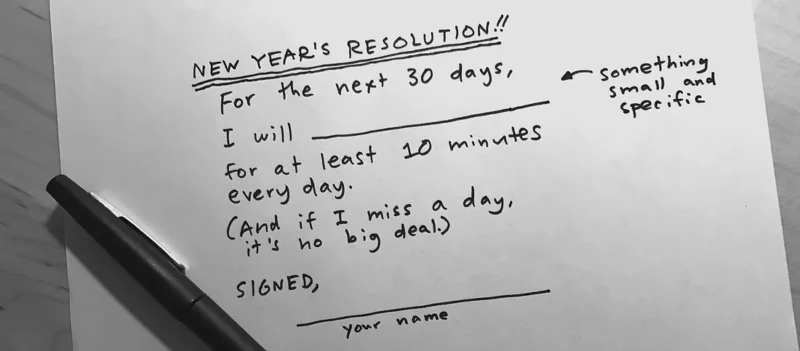
What makes resolutions stick?
Oscarsson et al. (2020) conducted research into what makes New Year’s resolutions stick. Biggest success rates depended on how people phrased their goals. Participants who set approach-oriented goals (trying to move toward or maintain a desirable outcome or state) than those with avoidance-oriented goals (trying to move toward or maintain a desirable outcome or state) were significantly more successful (58.9% vs. 47.1%) at sticking to their goals.
The study also investigates the effects of outside support. These participants received monthly follow-ups and emails with information and exercises for coping with hurdles when striving toward personal goals, and were also encouraged to set goals using the SMART technique and to set interim goals. The group that received some support was exclusively and significantly more successful compared to the groups who received a lot of support or no support at all.
Additionally, you might feel more successful if you set goals that are measurable in numbers. While success for a person striving to quit smoking or lose weight could easily be measured in the number of cigarettes smoked or body mass index, the success for a person striving to „take better care of themselves“ could be highly subjective and possibly impossible to measure.
So as we enter 2026, let’s remember to work with our brain’s natural learning system: Frame your goals positively, break them into manageable steps, and celebrate small wins along the way.