
A01 A02 A04 A05 A07 A09 A10 A11 A12 A13 A14 A18 A19 A21 F01 F02 INF Ö

Geistesblitz Bochum: Wissenschaft mitten in der Stadt

26. September 2026

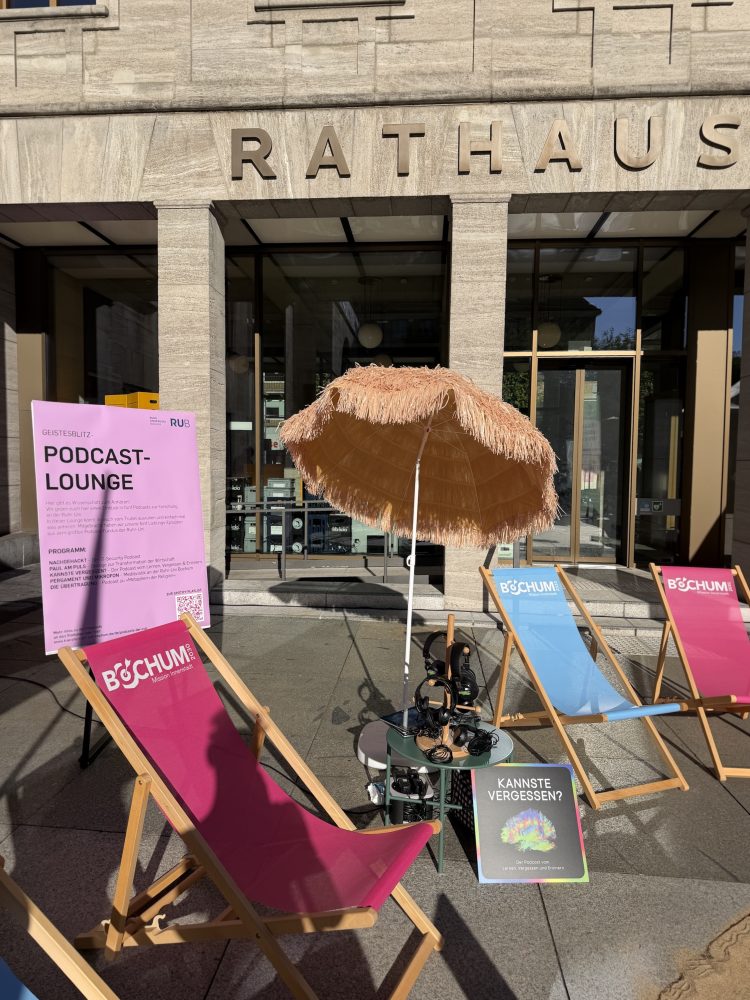
Am 25. September 2026 wurde die Bochumer Innenstadt zum Schauplatz für Wissenschaft, Forschung und Austausch: Beim ersten Wissensfestival „Geistesblitz Bochum – Das Wissensfestival rund um das Haus des Wissens“ präsentierten mehr als 30 Partner*innen aus Wissenschaft, Stadt und Zivilgesellschaft ihre Forschung. Von 16 bis 22 Uhr konnten Besucher*innen an verschiedenen Orten an Talks, Workshops, Ausstellungen, Experimenten und Mitmachaktionen teilnehmen.

In fünf Themenwelten ging es unter anderem um den Wandel Bochums, Nachhaltigkeit, Künstliche Intelligenz, gesellschaftlichen Zusammenhalt sowie Mathematik, Informatik, Naturwissenschaften und Technik. Dabei stand der direkte Austausch zwischen Wissenschaftler*innen und Stadtgesellschaft im Mittelpunkt. Die vielfältigen Angebote luden dazu ein, Forschung selbst auszuprobieren, Fragen zu stellen und neue Einblicke in aktuelle wissenschaftliche Themen zu gewinnen.

Auch die Ruhr-Universität Bochum war mit zahlreichen Beiträgen vertreten. Neben Angeboten der RUB Research School und verschiedener Fakultäten beteiligten sich mehrere Sonderforschungsbereiche am Festival. So präsentierte beispielsweise der SFB 1683 „Modular Reuse“ eine „Concrete Experiment Station“, während der SFB 1475 „Metaphern der Religion“ gemeinsam mit CERES den interaktiven Klimabeichtstuhl anbot.

Mit dem Geistesblitz Bochum wurde Wissenschaft aus Hörsälen und Laboren direkt in die Innenstadt gebracht. Die Premiere zeigte, wie vielfältig die Bochumer Wissenschaftslandschaft ist und wie Forschung durch offene und interaktive Formate mit der Stadtgesellschaft in den Dialog treten kann.
```
SFB 1280 Extinktionslernen Kontakt Universitäten
DFG-Förderlinie
Moodle Intern
Impressum
Datenschutz
Karte
```

New Year, New Me: The Facts

As the calendar turns to a new year, millions of people around the world commit to New Year’s resolutions, making promises to use the new year as a fresh beginning and an opportunity for transformation. In 2024, almost three-quarters of the British population set themselves New Year’s resolutions — that’s around 40 million people (or the entire population of Canada). This tradition was particularly strong among younger generations, with 96% of Generation Z (aged 18-27) planning resolutions, compared to just 35% of the Silent Generation (aged 79+).

Most common new years resolutions:

  1. Saving more money (52%)
  2. Eat healthier (50%)
  3. Exercise more (48%)
  4. Lose weight (37%)
  5. Spend more time with family/friends (35%)

How long do most resolutions normally last before being broken?

  • Data from America (2016) shows that 75% of individuals maintain their resolutions through the first week. 
  • 64% of individuals maintain their resolutions through the first month. 
  • 46% of individuals in America keep their resolutions past the 6-month mark.

What makes resolutions stick?

Oscarsson et al. (2020) conducted research into what makes New Year’s resolutions stick. Biggest success rates depended on how people phrased their goals. Participants who set approach-oriented goals (trying to move toward or maintain a desirable outcome or state) than those with avoidance-oriented goals (trying to move toward or maintain a desirable outcome or state) were significantly more successful (58.9% vs. 47.1%) at sticking to their goals.

The study also investigates the effects of outside support. These participants received monthly follow-ups and emails with information and exercises for coping with hurdles when striving toward personal goals, and were also encouraged to set goals using the SMART technique and to set interim goals. The group that received some support was exclusively and significantly more successful compared to the groups who received a lot of support or no support at all. 

Additionally, you might feel more successful if you set goals that are measurable in numbers. While success for a person striving to quit smoking or lose weight could easily be measured in the number of cigarettes smoked or body mass index, the success for a person striving to „take better care of themselves“ could be highly subjective and possibly impossible to measure.

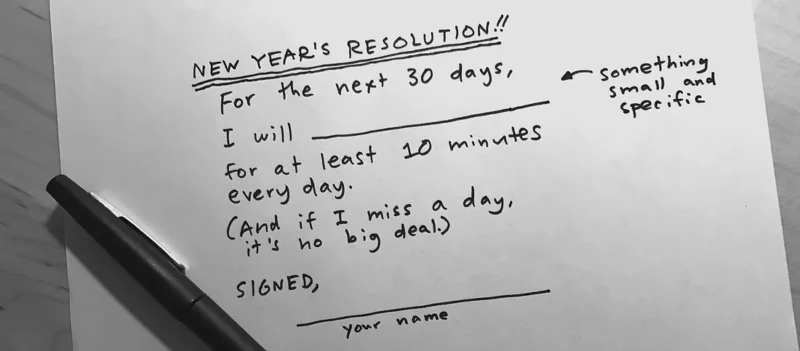
So as we enter 2026, let’s remember to work with our brain’s natural learning system: Frame your goals positively, break them into manageable steps, and celebrate small wins along the way.