
A18 – Wie Lernen Immunität formt
Martin Hadamitzky
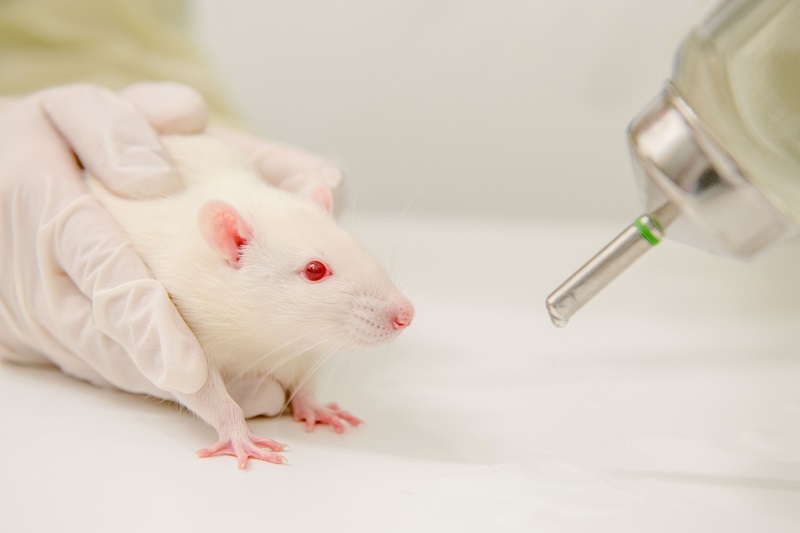
Aufbauend auf unserem etablierten Geschmacksaversionsparadigma mit dem Calcineurin-inhibitor Cyclosporin A, werden wir die Extinktions- und Rekonsolidierungprozesse der gelernten Immunantwort bei Substanzen mit unterschiedlichen immunopharmakologischen Wirkprofilen untersuchen (Rapamycin, Methotrexate). Wir werden mittels DREADDs die an diesen Prozessen beteiligten Hirnstrukturen identifizieren und die potenzielle klinische Relevanz der gelernten Immunantwort anhand eines bei der Ratte etablierten Tumormodells sowie eines Modells für chronisch entzündliche Autoimmunerkrankungen überprüfen.
Leitfragen des Projekts A18:
- Sind gelernte Immunantworten beschränkt auf Calcineurin Inhibitoren wie CsA oder läuft eine Konditionierung mit Arzneimitteln, die über andere Signaltransduktionswege vermittelt werden, wie RAPA oder MTX, über ähnlichen Mechanismen ab?
- Welche Bereiche des Gehirns sind an den Lern- und Extinktionsprozessen konditionierter immunpharmakologischer Effekte beteiligt?
- Kann die Extinktion der erlernten immunpharmakologischen Wirkungen von RAPA und MTX gehemmt werden, indem sub- oder niedrig-therapeutische Arzneimitteldosen während des Abrufs der konditionierten Reaktion als Gedächtnisstütze gleichzeitig mit dem CS verabreicht werden?
- Sind verhaltenskonditionierte anti-proliferative (RAPA) und anti-metabolische Effekte (MTX) bei Krankheitsverläufen in Tiermodellen für Tumorwachstum und entzündliche Autoimmunerkrankungen induzierbar und somit von klinischer Relevanz?


10 projektrelevante Publikationen
Bihorac J, Salem Y, Lückemann L, Schedlowski M, Doenlen R, Engler H, Mark MD, Dombrowski K, Spoida K, Hadamitzky M (2024) Investigations on the Ability of the Insular Cortex to Process Peripheral Immunosuppression. J Neuroimmune Pharmacol 19:40. https://doi.org/10.1007/s11481-024-10143-9
Hadamitzky M, Bosche K, Wirth T, Buck B, Beetz O, Christians U, Schniedewind B, Luckemann L, Güntürkün O, Engler H, Schedlowski M (2016) Memory-updating abrogates extinction of learned immunosuppression. Brain Behav Immun 52:40-48. https://doi.org/10.1016/j.bbi.2015.09.009
Hadamitzky M, Lückemann L, Pacheco-López G, Schedlowski M (2020) Pavlovian Conditioning of Immunological and Neuroendocrine Functions. Physiol Rev. 100:357-405. https://doi.org/10.1152/physrev.00033.2018
Hadamitzky M, Schedlowski M (2022) Harnessing associative learning paradigms to optimize drug treatment. Trends Pharmacol Sci. 43:464-472. https://doi.org/10.1016/j.tips.2022.03.002
Hetze S, Barthel L, Lückemann L, Günther HS, Wülfing C, Salem Y, Jakobs M, Hörbelt T, Bendix I, Sure U, Petschulat J, Schedlowski M, Hadamitzky M (2022). Taste-immune associative learning amplifies immunopharmacological effects and attenuates disease progression in a rat glioblastoma model. Brain Behav Immun. 106:270-279. https://doi.org/10.1016/j.bbi.2022.09.006
Jakobs M, Hörbelt-Grünheidt T, Hadamitzky M, Julia Bihorac, Salem Y, Leisengang S, Christians U, Schniedewind B, Schedlowksi M, Hadamitzky M, Lückemann L (2024b). The effects of fingolimod (FTY720) on leukocyte subset circulation cannot be behaviorally conditioned in rats. J Neuroimmune Pharm. 19:18. https://doi.org/10.1007/s11481-024-10122-0
Lückemann L, Hetze S, Hörbelt T, Schedlowski M, Hadamitzky M (2021) Incomplete reminder cues trigger memory reconsolidation and sustain learned immune responses. Brain Behav Immun. 95:115-121. https://doi.org/10.1016/j.bbi.2021.03.001
Lückemann L, Stangl H, Straub RH, Schedlowski M, Hadamitzky M (2020) Learned immunosuppressive placebo response attenuates disease progression in a rodent model of rheumatoid arthritis. Arthritis Rheumatol. 72:588-597. https://doi.org/10.1002/art.41101
Lückemann L, Unteroberdörster M, Martínez-Gómez EM, Schedlowski M, Hadamitzky M (2019) Behavioral Conditioning of Anti-Proliferative and Immunosuppressive Properties of the mTOR Inhibitor Rapamycin. Brain Behav Immun. 79:326-331. https://doi.org/10.1016/j.bbi.2019.04.013
Schwarting RKW, Wöhr M, Engler H, Sungur A, Schedlowski M (2024) Behaviorally conditioned effects of psychoactive drugs in experimental animals: What we have learned from nearly a century of research and what remains to be learned. Neurosci Biobehav Rev 162:105721. https://doi.org/10.1016/j.neubiorev.2024.105721
New Year, New Me: The Facts
As the calendar turns to a new year, millions of people around the world commit to New Year’s resolutions, making promises to use the new year as a fresh beginning and an opportunity for transformation. In 2024, almost three-quarters of the British population set themselves New Year’s resolutions — that’s around 40 million people (or the entire population of Canada). This tradition was particularly strong among younger generations, with 96% of Generation Z (aged 18-27) planning resolutions, compared to just 35% of the Silent Generation (aged 79+).
Most common new years resolutions:
- Saving more money (52%)
- Eat healthier (50%)
- Exercise more (48%)
- Lose weight (37%)
- Spend more time with family/friends (35%)
How long do most resolutions normally last before being broken?
- Data from America (2016) shows that 75% of individuals maintain their resolutions through the first week.
- 64% of individuals maintain their resolutions through the first month.
- 46% of individuals in America keep their resolutions past the 6-month mark.

What makes resolutions stick?
Oscarsson et al. (2020) conducted research into what makes New Year’s resolutions stick. Biggest success rates depended on how people phrased their goals. Participants who set approach-oriented goals (trying to move toward or maintain a desirable outcome or state) than those with avoidance-oriented goals (trying to move toward or maintain a desirable outcome or state) were significantly more successful (58.9% vs. 47.1%) at sticking to their goals.
The study also investigates the effects of outside support. These participants received monthly follow-ups and emails with information and exercises for coping with hurdles when striving toward personal goals, and were also encouraged to set goals using the SMART technique and to set interim goals. The group that received some support was exclusively and significantly more successful compared to the groups who received a lot of support or no support at all.
Additionally, you might feel more successful if you set goals that are measurable in numbers. While success for a person striving to quit smoking or lose weight could easily be measured in the number of cigarettes smoked or body mass index, the success for a person striving to „take better care of themselves“ could be highly subjective and possibly impossible to measure.
So as we enter 2026, let’s remember to work with our brain’s natural learning system: Frame your goals positively, break them into manageable steps, and celebrate small wins along the way.