
A01 A02 A03 A04 A05 A06 A07 A09 A10 A11 A12 A13 A14 A18 A19 A21 F01 F02 INF Ö

Kannste Vergessen? – Neue Podcastfolge online! „Changing Minds“

Diesmal gehen wir wirklich in die Praxis: Dr. Marlies Pinnow ist Psychologin und leitet die Arbeitsgruppe Motivation an der Ruhr-Universität Bochum – das heißt, von ihr kann man lernen, was uns im Innersten auf den Beinen hält. Wie erreiche ich meine Ziele? Woher weiß ich überhaupt, was meine Ziele sind? Wie kann ich motiviert bleiben? Muss ich immer tapfer und fleißig sein, um da anzukommen, wo ich hinwill?

Scherz beiseite: Moderator und Poetry Slammer Rainer Holl fragt Marlies Pinnow, was die Psychologie über unsere inneren Beweggründe weiß, wie sich neurowissenschaftliche Erkenntnisse in der Praxis bewähren und was die Motivationspsychologie für erstaunliche Erkenntnisse über unsere gesteckten Ziele zutage gefördert hat.

Diese Folge steckt voller Tipps für alle, die nicht so genau wissen, wohin ihre guten Vorsätze eigentlich schon wieder verschwunden sind (Es ist doch erst April …) und wie sie ihre Ziele und Wünsche wirklich umsetzen können. Bei all der Praxis bleibt natürlich auch die Grundlagenforschung nicht auf der Strecke, denn Marlies Pinnow hat viel Erfahrung und ein vielfältiges Forschungsleben in Psychologie und Neurowissenschaft, aus dem sie erzählt.
Mehr zum Podcast: >>
Direktlink zur Podcast-Episode: >>

New Year, New Me: The Facts

As the calendar turns to a new year, millions of people around the world commit to New Year’s resolutions, making promises to use the new year as a fresh beginning and an opportunity for transformation. In 2024, almost three-quarters of the British population set themselves New Year’s resolutions — that’s around 40 million people (or the entire population of Canada). This tradition was particularly strong among younger generations, with 96% of Generation Z (aged 18-27) planning resolutions, compared to just 35% of the Silent Generation (aged 79+).

Most common new years resolutions:

  1. Saving more money (52%)
  2. Eat healthier (50%)
  3. Exercise more (48%)
  4. Lose weight (37%)
  5. Spend more time with family/friends (35%)

How long do most resolutions normally last before being broken?

  • Data from America (2016) shows that 75% of individuals maintain their resolutions through the first week. 
  • 64% of individuals maintain their resolutions through the first month. 
  • 46% of individuals in America keep their resolutions past the 6-month mark.

What makes resolutions stick?

Oscarsson et al. (2020) conducted research into what makes New Year’s resolutions stick. Biggest success rates depended on how people phrased their goals. Participants who set approach-oriented goals (trying to move toward or maintain a desirable outcome or state) than those with avoidance-oriented goals (trying to move toward or maintain a desirable outcome or state) were significantly more successful (58.9% vs. 47.1%) at sticking to their goals.

The study also investigates the effects of outside support. These participants received monthly follow-ups and emails with information and exercises for coping with hurdles when striving toward personal goals, and were also encouraged to set goals using the SMART technique and to set interim goals. The group that received some support was exclusively and significantly more successful compared to the groups who received a lot of support or no support at all. 

Additionally, you might feel more successful if you set goals that are measurable in numbers. While success for a person striving to quit smoking or lose weight could easily be measured in the number of cigarettes smoked or body mass index, the success for a person striving to „take better care of themselves“ could be highly subjective and possibly impossible to measure.

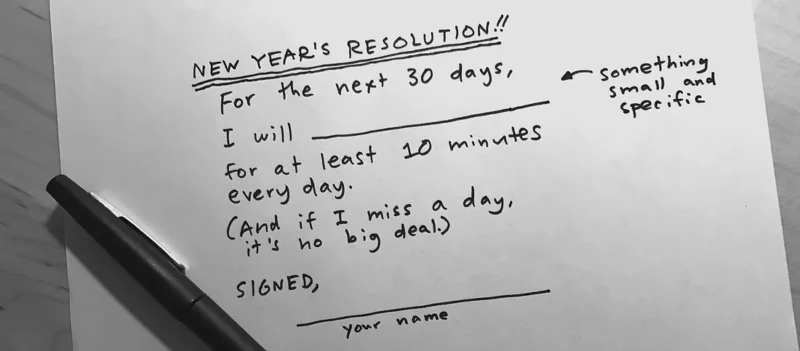
So as we enter 2026, let’s remember to work with our brain’s natural learning system: Frame your goals positively, break them into manageable steps, and celebrate small wins along the way.