A01 A02 A03 A04 A05 A06 A07 A09 A10 A11 A12 A13 A14 A18 A19 A21 F01 F02 INF Ö

A01 – Extinktionslernen in der vierten Dimension

Onur Güntürkün, Roland Pusch

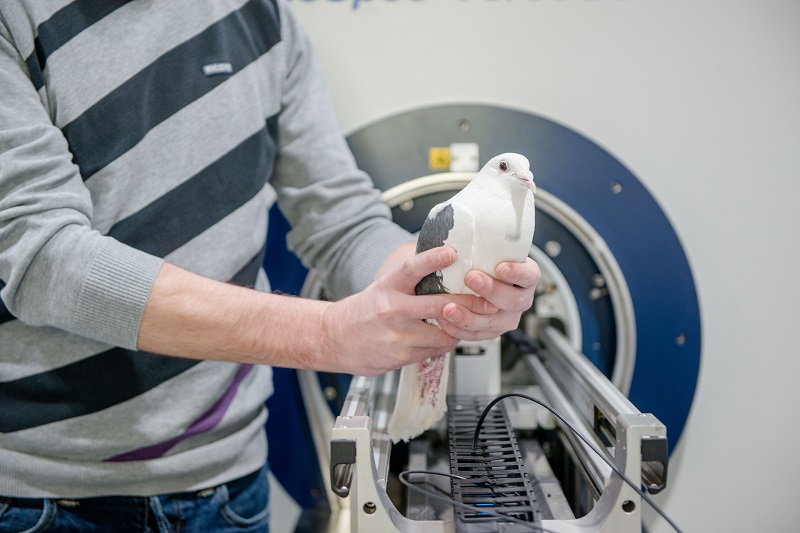
Dieses Projekt untersucht neuronale Grundlagen der Extinktion appetitiver Konditionierung in Tauben mit einem Ansatz, der es erlaubt über den gesamten experimentellen Zeitraum (der vierten Dimension) neurale Ereignisse zu analysieren, die der Akquisition, kontextabhängiger Extinktion und Renewal zugrunde liegen. Wir kombinieren Einzelzellableitungen, funktionale Bildgebung und optogenetische Methoden in wachen Tauben um Schlüsselereignisse und kausale Wechselbeziehungen zwischen Gehirnarealen des Extinktionsnetzwerks (NCL, NFL, Arcopallium, Hippocampus) auf zellulärer und systemischer Ebene zu untersuchen. Die Untersuchungen an einem anderen Modellorganismus sollen veränderliche und unveränderliche Eigenschaften des Extinktionslernens auf verhaltens- und neurobiologischer Ebene aufdecken.

Leitfragen des Projekts A01:

  • Wird durch Extinktionslernen die neuronale Repräsentation konditionierter Reize (CS) im präfrontalen NCL, im motorischen Arcopallium, im visuellen NFL und in dem Hippocampus kontextspezifisch verändert?
  • Wie wird die Repräsentation des CS in der visuellen Struktur NFL, den präfrontalen NCL und im Hippocampus durch die „präfrontale“ NCL während des Extinktionslernens und dem Renewal moduliert?
  • Welche Vorderhirnbereiche jenseits dieser vier Strukturen nehmen an der Welche Vorderhirnbereiche jenseits dieser vier Strukturen nehmen an der appetitiven Extinktion und dem Renewal teil und was ist ihre Aktivierungssequenz während eines Diskriminations-Extinktions-Erneuerungs-Zyklus?

Onur Güntürkün

Projektleiter A01, F01, Z, Ö

Ruhr-Universität Bochum

Roland Pusch

Projektleiter A01

Ruhr-Universität Bochum

Mina Khodadadi

Postdoc A01

Ruhr-Universität Bochum

Robert Reichert

Doktorand A01

Ruhr-Universität Bochum

10 projektrelevante Publikationen

Behroozi M, Lorenzi E, Tabrik S, Tegenthoff M, Gozzi A, Güntürkün O, Vallortigara G (2024) Functional MRI of imprinting memory in awake newborn domestic chicks. Commun Biol. 7: 1326. https://doi.org/10.1038/s42003-024-06991-z

Güntürkün O, Pusch R, Rose J (2024) Why birds are smart. Trends Cogn Sci. 28: 197–209. https://doi.org/10.1016/j.tics.2023.11.002 

Güntürkün O, von Eugen K, Packheiser J, Pusch R (2021) Avian pallial circuits and cognition – A comparison to mammals. Curr Opin in Neurobiol. 71: 29–36. https://doi.org/10.1016/j.conb.2021.08.007

Khodadadi M, Helluy X, Güntürkün O, Behroozi M (2023) Segmented Spin-Echo EPI imaging improves whole-brain BOLD fMRI in awake pigeon brains. NMR Biomed. 8: e5034. https://doi.org/10.1002/nbm.5034

Packheiser J, Donoso JR, Cheng S, Güntürkün O, Pusch R (2021) Trial-by-trial dynamics of reward prediction errors during extinction learning and renewal. Prog Neurobiol. 197: 101901. https://doi.org/10.1016/j.pneurobio.2020.101901

Pusch R, Packheiser J, Azizi AH, Sevincik CS, Rose J, Cheng S, Stüttgen MC, Güntürkün O (2023) Working memory performance is tied to stimulus complexity. Commun Biol. 6: 111. https://doi.org/10.1038/s42003-023-05486-7

Rook N, Tuff JM, Isparta S, Masseck O, Herlitze S, Güntürkün O, Pusch R (2021) AAV1 is the optimal viral vector for optogenetic experiments in pigeons (Columba livia). Commun Biol. 4: 100. https://doi.org/10.1038/s42003-020-01595-9

Sadraee A, Helluy X, Genç, E, Gao M, Behroozi M, Güntürkün O (2025) Neural correlates of appetitive extinction learning: An fMRI study with actively participating pigeons, bioRxiv 2025.04.28.650993 https://doi.org/10.1101/2025.04.28.650993

Sevincik S, Packheiser J, Donoso JR, Cheng S, Güntürkün O, Pusch R (2025) Divide and conquer: How single units of the avian „prefrontal“ area and hippocampus complementary process extinction learning, BioRxiv. bioRxiv 2025.03.21.644535 https://doi.org/10.1101/2025.03.21.644535

Steinemer A, Simon A, Güntürkün O, Rook N (2024) Parallel executive pallio-motor loops in the pigeon brain. J Comp Neurol. 532: e25611. https://doi.org/10.1002/cne.25611 

New Year, New Me: The Facts

As the calendar turns to a new year, millions of people around the world commit to New Year’s resolutions, making promises to use the new year as a fresh beginning and an opportunity for transformation. In 2024, almost three-quarters of the British population set themselves New Year’s resolutions — that’s around 40 million people (or the entire population of Canada). This tradition was particularly strong among younger generations, with 96% of Generation Z (aged 18-27) planning resolutions, compared to just 35% of the Silent Generation (aged 79+).

Most common new years resolutions:

  1. Saving more money (52%)
  2. Eat healthier (50%)
  3. Exercise more (48%)
  4. Lose weight (37%)
  5. Spend more time with family/friends (35%)

How long do most resolutions normally last before being broken?

  • Data from America (2016) shows that 75% of individuals maintain their resolutions through the first week. 
  • 64% of individuals maintain their resolutions through the first month. 
  • 46% of individuals in America keep their resolutions past the 6-month mark.

What makes resolutions stick?

Oscarsson et al. (2020) conducted research into what makes New Year’s resolutions stick. Biggest success rates depended on how people phrased their goals. Participants who set approach-oriented goals (trying to move toward or maintain a desirable outcome or state) than those with avoidance-oriented goals (trying to move toward or maintain a desirable outcome or state) were significantly more successful (58.9% vs. 47.1%) at sticking to their goals.

The study also investigates the effects of outside support. These participants received monthly follow-ups and emails with information and exercises for coping with hurdles when striving toward personal goals, and were also encouraged to set goals using the SMART technique and to set interim goals. The group that received some support was exclusively and significantly more successful compared to the groups who received a lot of support or no support at all. 

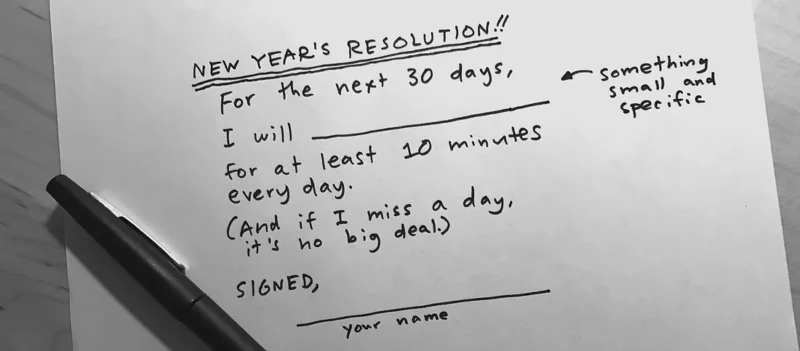
Additionally, you might feel more successful if you set goals that are measurable in numbers. While success for a person striving to quit smoking or lose weight could easily be measured in the number of cigarettes smoked or body mass index, the success for a person striving to „take better care of themselves“ could be highly subjective and possibly impossible to measure.

So as we enter 2026, let’s remember to work with our brain’s natural learning system: Frame your goals positively, break them into manageable steps, and celebrate small wins along the way.