
Impressum
Es gilt das Impressum der Domäne Ruhr-Uni-Bochum.de. Der vorliegende Blog ist auf dem Server der Ruhr-Universität Bochum eingerichtet. Die Verantwortlichkeiten und relevanten Adressen für den zentralen Blog-Server sind im Impressum der Ruhr-Universität genannt. Meldungen über missbräuchliche Nutzungen, die von Stationen aus dem IP-Namensbereich ruhr-uni-bochum.de ausgehen, senden Sie bitte an die Email-Adresse abuse@ruhr-uni-bochum.de.
Gemäß § 28 BDSG wird jeder kommerziellen Verwendung und Weitergabe der im Blog verwendeten Personendaten (Namen, E-Mail-Adressen, postalische Adressen etc.) widersprochen.
Herausgeber
Sonderforschungsbereich SFB 1280 Extinktionslernen
Ruhr-Universität Bochum
Universitätsstraße 150
44801 Bochum
Raum: IB 6/123
Tel.: 0234 32-24634
Fax: 0234 32-14377
Mail: extinction-learning@rub.de
Vertretung
Der von der Deutschen Forschungsgemeinschaft geförderte Sonderforschungsbereich SFB 1280 Exinktionslernen ist eine Einrichtung an der Ruhr-Universität Bochum. Der Forschungsverbund wird vertreten durch seine Sprecher; dem Sprecher Herrn Professor Dr. Onur Güntürkün und der Vize-Sprecherin Frau Dr. Professorin Dagmar Timmann.
Haftungshinweis
Trotz sorgfältiger inhaltlicher Kontrolle übernehmen wir keine Haftung für die Inhalte externer Links. Für den Inhalt der verlinkten Seiten sind ausschließlich deren Betreibende verantwortlich.
Quellennachweis der verwendeten Bilder
Bei etwaigen Verletzungen des Persönlichkeitsrechts bitten wir darum, in Kenntnis gesetzt zu werden. Wir werden in diesem Fall die jeweiligen Bilder bzw. Videos umgehend entfernen.
Bildrechte auf dieser Webseite liegen sofern nicht anders angegeben beim Dezernat für Hochschulkommunikation der Ruhr-Universität Bochum oder dem Sonderforschungsbereich 1280.
FotografInnen
>> Katja Marquard, Agentur der Ruhr-Universität Bochum, Bildredaktion
>> Muriel Kaysh, Studentische Hilfskraft des SFB 1280
>> sowie Mitglieder des SFB 1280 und der FOR 1581
>> Susanne Troll ist Fotografin des ersten Bildes für das Research Department of Neuroscience der RUB (Seite „Karriereförderung“) sowie der Bilder zur International Graduate School of Neuroscience (Seite „Doktorandenschulen“, „Gleichstellung“).
>> Dr. Alexander Munteanu ist Fotograf der Aufnahmen aus der Abteilung für Biopsychologie (Seite „Entdecken“).
>> MushonZer-Aviv ist Graphiker des Bildes „Standing on the Shoulders of Giants“, gefunden auf Flickr.com (Seite „Karriereförderung“). Der Münszstapel ist von der Seite ignorelimits.com/if-i-have-seen-further-it-is-by-standing-on-the-shoulders-of-giants
>> Der Zeitschriftenausschnitt (Seite „Mediathek“) entspringt dem DFG Magazin Ausgabe 04/2014, im „Kid’s Corner“ (Seite „Mediathek“) stammen die genutzen Symbolbilder von mein-gehirn.info des Neuropsychologischen Therapie Centrums des Instituts für Neurowissenschaft der RUB sowie von der Website der gemeinnützigen Hertie-Stiftung
>> Victor Delbono ist Graphiker der Animation „Working together“ (Seite „Kooperation“) – https://lottiefiles.com/34226-working-together
>> Das Wissenschaftspodcast Logo (Seite „Podcast“) wurde von Sven Sedivy (@graphorama) gestaltet
New Year, New Me: The Facts
As the calendar turns to a new year, millions of people around the world commit to New Year’s resolutions, making promises to use the new year as a fresh beginning and an opportunity for transformation. In 2024, almost three-quarters of the British population set themselves New Year’s resolutions — that’s around 40 million people (or the entire population of Canada). This tradition was particularly strong among younger generations, with 96% of Generation Z (aged 18-27) planning resolutions, compared to just 35% of the Silent Generation (aged 79+).
Most common new years resolutions:
- Saving more money (52%)
- Eat healthier (50%)
- Exercise more (48%)
- Lose weight (37%)
- Spend more time with family/friends (35%)
How long do most resolutions normally last before being broken?
- Data from America (2016) shows that 75% of individuals maintain their resolutions through the first week.
- 64% of individuals maintain their resolutions through the first month.
- 46% of individuals in America keep their resolutions past the 6-month mark.
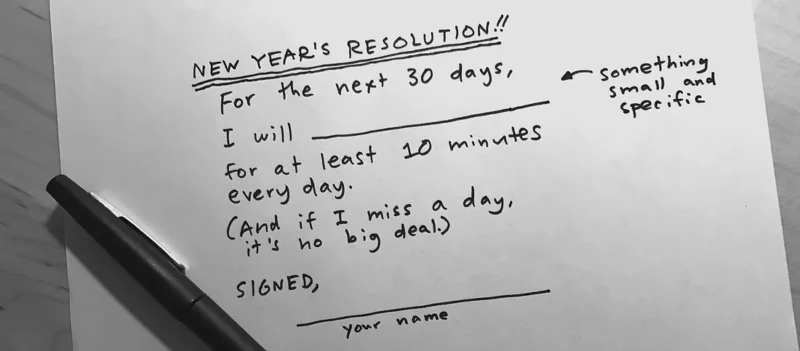
What makes resolutions stick?
Oscarsson et al. (2020) conducted research into what makes New Year’s resolutions stick. Biggest success rates depended on how people phrased their goals. Participants who set approach-oriented goals (trying to move toward or maintain a desirable outcome or state) than those with avoidance-oriented goals (trying to move toward or maintain a desirable outcome or state) were significantly more successful (58.9% vs. 47.1%) at sticking to their goals.
The study also investigates the effects of outside support. These participants received monthly follow-ups and emails with information and exercises for coping with hurdles when striving toward personal goals, and were also encouraged to set goals using the SMART technique and to set interim goals. The group that received some support was exclusively and significantly more successful compared to the groups who received a lot of support or no support at all.
Additionally, you might feel more successful if you set goals that are measurable in numbers. While success for a person striving to quit smoking or lose weight could easily be measured in the number of cigarettes smoked or body mass index, the success for a person striving to „take better care of themselves“ could be highly subjective and possibly impossible to measure.
So as we enter 2026, let’s remember to work with our brain’s natural learning system: Frame your goals positively, break them into manageable steps, and celebrate small wins along the way.