
A01 A02 A03 A04 A05 A06 A07 A09 A10 A11 A12 A13 A14 A18 A19 A21 F01 F02 INF Ö

Forschungskooperation – „Menschen erzählen“

Wir freuen uns nach Feierabend auf ein kühles Bier. Doch plötzlich durchzuckt uns ein Schmerz – Zahnweh! Wir alle kennen das Gefühl. Wir alle hatten schon mal Zahnschmerzen. Und doch würde jeder von uns die Geschichte anders erzählen.

Wie wir Schmerz oder Angst erleben und wie jeder von uns eine ganz andere Geschichte dazu hat, erforschen Mita Banerjee und Amina Touzos. Sie kooperieren dabei mit den Teilprojekten A11 und A13 des SFB 1280. „Die Methode, die wir dafür verwenden, heißt Narrative Medizin. Sie wurde an der Columbia University in New York entwickelt,“ berichtet Mita Banerjee, Professorin für amerikanische Literaturwissenschaft an der Universität Mainz. „Als Literaturwissenschaftlerinnen hören wir noch ganz anders auf Geschichten. Wenn man zum Beispiel einen Roman oder eine Detektivgeschichte liest, kann jedes Wort wichtig sein, man darf nichts verpassen. Jede Kleinigkeit kann der entscheidende Hinweis auf die Lösung sein,“ beschreibt Banerjee. Genau das gilt auch für die Art und Weise, wie wir Erzählungen über Schmerz oder Angst hören können. Diese Geschichten noch genauer zu erfassen kann auch Mediziner:innen und Forscher:innen weiterhelfen, die Erfahrungen ihrer PatientInnen besser zu verstehen.

Mehr erfahren auf der Projektseite: >>
New Year, New Me: The Facts

As the calendar turns to a new year, millions of people around the world commit to New Year’s resolutions, making promises to use the new year as a fresh beginning and an opportunity for transformation. In 2024, almost three-quarters of the British population set themselves New Year’s resolutions — that’s around 40 million people (or the entire population of Canada). This tradition was particularly strong among younger generations, with 96% of Generation Z (aged 18-27) planning resolutions, compared to just 35% of the Silent Generation (aged 79+).

Most common new years resolutions:

  1. Saving more money (52%)
  2. Eat healthier (50%)
  3. Exercise more (48%)
  4. Lose weight (37%)
  5. Spend more time with family/friends (35%)

How long do most resolutions normally last before being broken?

  • Data from America (2016) shows that 75% of individuals maintain their resolutions through the first week. 
  • 64% of individuals maintain their resolutions through the first month. 
  • 46% of individuals in America keep their resolutions past the 6-month mark.

What makes resolutions stick?

Oscarsson et al. (2020) conducted research into what makes New Year’s resolutions stick. Biggest success rates depended on how people phrased their goals. Participants who set approach-oriented goals (trying to move toward or maintain a desirable outcome or state) than those with avoidance-oriented goals (trying to move toward or maintain a desirable outcome or state) were significantly more successful (58.9% vs. 47.1%) at sticking to their goals.

The study also investigates the effects of outside support. These participants received monthly follow-ups and emails with information and exercises for coping with hurdles when striving toward personal goals, and were also encouraged to set goals using the SMART technique and to set interim goals. The group that received some support was exclusively and significantly more successful compared to the groups who received a lot of support or no support at all. 

Additionally, you might feel more successful if you set goals that are measurable in numbers. While success for a person striving to quit smoking or lose weight could easily be measured in the number of cigarettes smoked or body mass index, the success for a person striving to „take better care of themselves“ could be highly subjective and possibly impossible to measure.

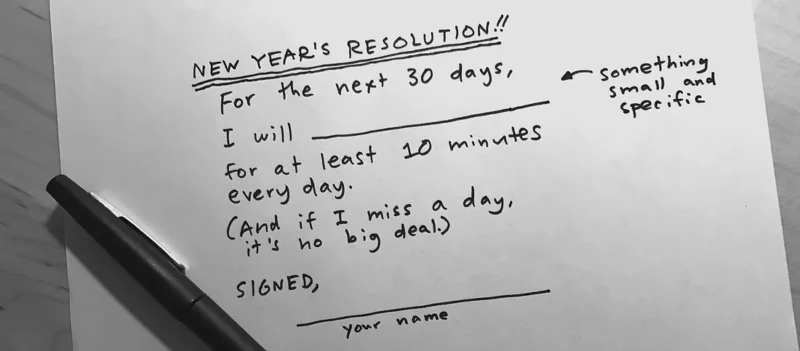
So as we enter 2026, let’s remember to work with our brain’s natural learning system: Frame your goals positively, break them into manageable steps, and celebrate small wins along the way.