A01 A02 A03 A04 A05 A06 A07 A09 A10 A11 A12 A13 A14 A18 A19 A21 F01 F02 INF Ö

Why the brain doesn’t forget,

but you can't remember

Learning is difficult, forgetting is sometimes even much harder. Unlearning, relearning or extinction learning – these all belong to what we would generally call forgetting and what is the subject of our research.

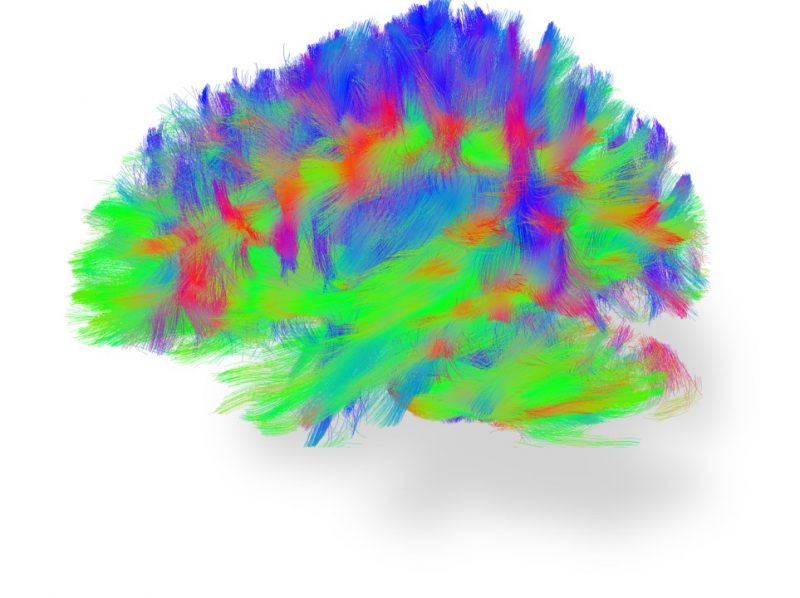
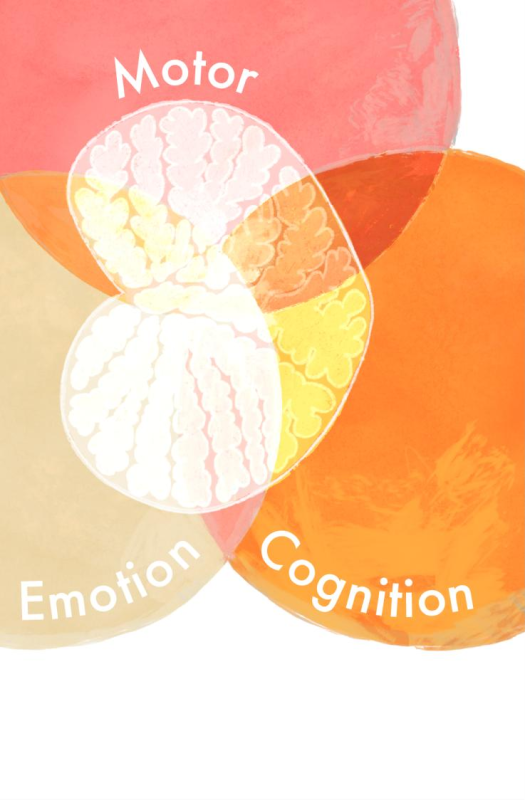
Diffusion Tensor Imaging of the Brain, a technique used here by subproject A03.

Everything with one click

The SFB 1280

investigates on extinction learning

We can easily learn and store new information. However, we are equally able to learn that once acquired information is no longer valid, and cease to respond to it. While the initial acquisition of knowledge is well studied, the process of extinction is far less understood.

Extinction involves both forgetting as well as a new learning process that is different and far more complex than the initial learning event. Extinguished responses do not simply disappear but can return under diverse conditions – potentially turning them into invasive components of psychopathological conditions. Despite its relevance, the behavioral, the neural, and the clinical aspects of extinction are by far not understood.

Our Collaborative Research Center SFB 1280 aims to study the neural, behavioral, ontogenetic, educational, and clinical mechanisms of extinction in various species, including humans. The diversity of our approaches at the systems and at the methodological level is combined with a high level of homogeneity at structural, experimental, technical, and conceptual levels: At the structural level, all neurobiological and clinical groups concentrate on a network of anatomical structures that are core constituents of extinction learning. At the experimental design level, most studies utilize similar approaches to maximize transfer of data and knowledge between research groups. In addition, wherever possible, experimental projects utilize causal manipulations to achieve mechanistic insights.

At the technical level, Focus Groups on learning dynamics and neuroimaging will integrate data from diverse research groups and experimental approaches for large-scale analysis. But we will also ensure state-of-the-art methods of data acquisition and analysis into the SFB-projects. Finally, and most importantly, at the conceptual level the council bases its research on a set of hypotheses several of which are to be tested by each and every project. Thus, all SFB-projects are inextricably intertwined in an experimental and conceptual meshwork that ensures both a coherent research strategy and maximal horizontal transfer of knowledge in clinical and societal applications.

An SFB offers the unique opportunity to foster a research field with all relevant components.

As the basis for the first four years of funding, the Sonderfoschungsbereich already has an excellent standing with respect to the behavioral, clinical, and neurobiological analyses of learning. According to our vision for the entire 12-year period, we plan to develop four further areas.

The first area is theoretical neuroscience that is presently represented by one project. The number of such projects will possibly increase very modestly over 12 years but their impact is of disproportionate importance for the SFB. One vehicle for this is the Focus Group F01 that already aims to foster the analysis of trial-by-trial dynamics and data mining approaches within the SFB 1280.

The second area of growth will be constituted by the (epi)genetic components of extinction learning. Beginning with the second funding period, we aim to incorporate animal models that enable an analysis of histone and DNA modifications that characterize extinction events. In human subjects, the plan of SFB 1280 is to then assess DNA methylation patterns that could explain some of the interindividual variation in structural connectivity, resting state fMRI or susceptibility for developing anxiety disorders.

The third pillar of the long-term plan is to study the ontogenetic development of extinction learning under developmental, neurobiological, clinical, and pedagogical perspectives. The council intends to achieve this by combining cross-sectional studies on different age groups with a longitudinal analysis.

Fourth, together with other key local neuroscience consortia and structures of the UA Ruhr our SFB 1280 intends to evolve into an internationally visible center for the neuroscience of learning. The Sonderforschungsbereich is a crucial step for this long-term plan which constitutes a perfect fit with the complementary neuroscience and cognitive science specializations of the large research universities within the Ruhr valley.

       A Collaborative Research Centre (Sonderfoschungsbereich, SFB) is a council of scientists,

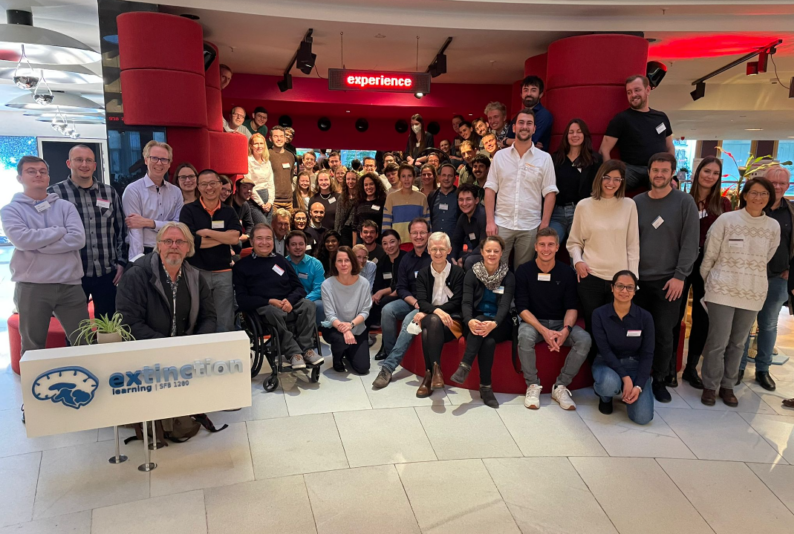
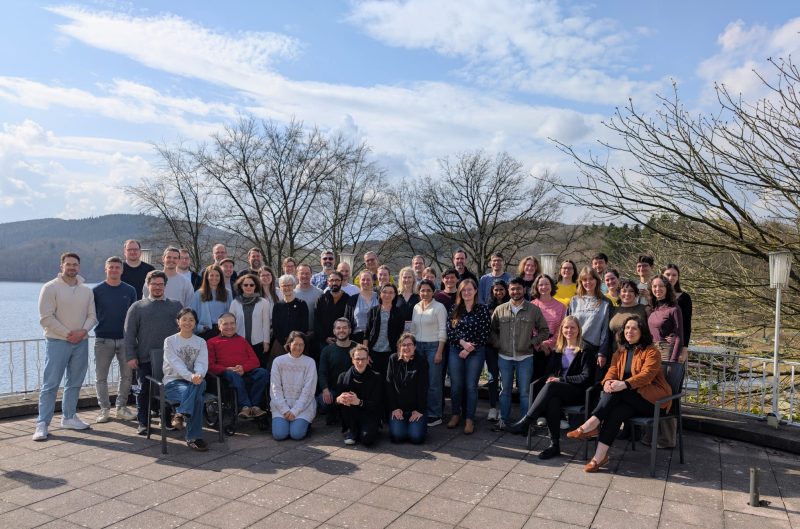
which is supported by the German Research Foundation (Deutsche Forschungsgemeinschaft, DFG) with funds from the federal government and states. In 2017 we received their permission to start our research as an SFB. In the SFB 1280 “Extinction Learning” psychologists, physicians, computational neuroscientists, and biologists come together in the Ruhr Area and at the University of Marburg. As a consortium of 19 scientific teams, we have set themselves the goal of developing a new, comprehensive understanding of extinction learning. Within the Ruhr area, the conditions are particularly favourable. The laboratories are always only a few steps or kilometres apart. But the directions from which the riddle of extinction learning is approached are all the more different: In the SFB 1280, we work with humans and rats, pigeons and robots. Learning behaviour is investigated in its neural, immunological, genetic, clinical and learning theory relevant aspects. The results are critically discussed among the subprojects and clasped together by the two focus groups.

Current Events & Activities

New Year, New Me: The Facts

As the calendar turns to a new year, millions of people around the world commit to New Year’s resolutions, making promises to use the new year as a fresh beginning and an opportunity for transformation. In 2024, almost three-quarters of the British population set themselves New Year’s resolutions — that’s around 40 million people (or the entire population of Canada). This tradition was particularly strong among younger generations, with 96% of Generation Z (aged 18-27) planning resolutions, compared to just 35% of the Silent Generation (aged 79+).

Most common new years resolutions:

  1. Saving more money (52%)
  2. Eat healthier (50%)
  3. Exercise more (48%)
  4. Lose weight (37%)
  5. Spend more time with family/friends (35%)

How long do most resolutions normally last before being broken?

  • Data from America (2016) shows that 75% of individuals maintain their resolutions through the first week. 
  • 64% of individuals maintain their resolutions through the first month. 
  • 46% of individuals in America keep their resolutions past the 6-month mark.

What makes resolutions stick?

Oscarsson et al. (2020) conducted research into what makes New Year’s resolutions stick. Biggest success rates depended on how people phrased their goals. Participants who set approach-oriented goals (trying to move toward or maintain a desirable outcome or state) than those with avoidance-oriented goals (trying to move toward or maintain a desirable outcome or state) were significantly more successful (58.9% vs. 47.1%) at sticking to their goals.

The study also investigates the effects of outside support. These participants received monthly follow-ups and emails with information and exercises for coping with hurdles when striving toward personal goals, and were also encouraged to set goals using the SMART technique and to set interim goals. The group that received some support was exclusively and significantly more successful compared to the groups who received a lot of support or no support at all. 

Additionally, you might feel more successful if you set goals that are measurable in numbers. While success for a person striving to quit smoking or lose weight could easily be measured in the number of cigarettes smoked or body mass index, the success for a person striving to “take better care of themselves” could be highly subjective and possibly impossible to measure.

So as we enter 2026, let’s remember to work with our brain’s natural learning system: Frame your goals positively, break them into manageable steps, and celebrate small wins along the way.