
Join in, because neuroscience doesn't just take place in the head.
Join in, because neuroscience doesn't just take place in the head.
School lab, School class visits, Internship or school paper
Brain research and psychology, that’s everyday life between high-tech and self-designed apparatus, interesting work and laboratory routines, close teamwork and the potential of individuals.
If you are a pupil or teacher and would like to get your own impression of careers in neuroscience, we cordially invite you to join us.
Here you will find all the information about possible offers from the SFB 1280 and the partner organisations. If you find something that interests you, you can contact us here >>. We look forward to your visit!
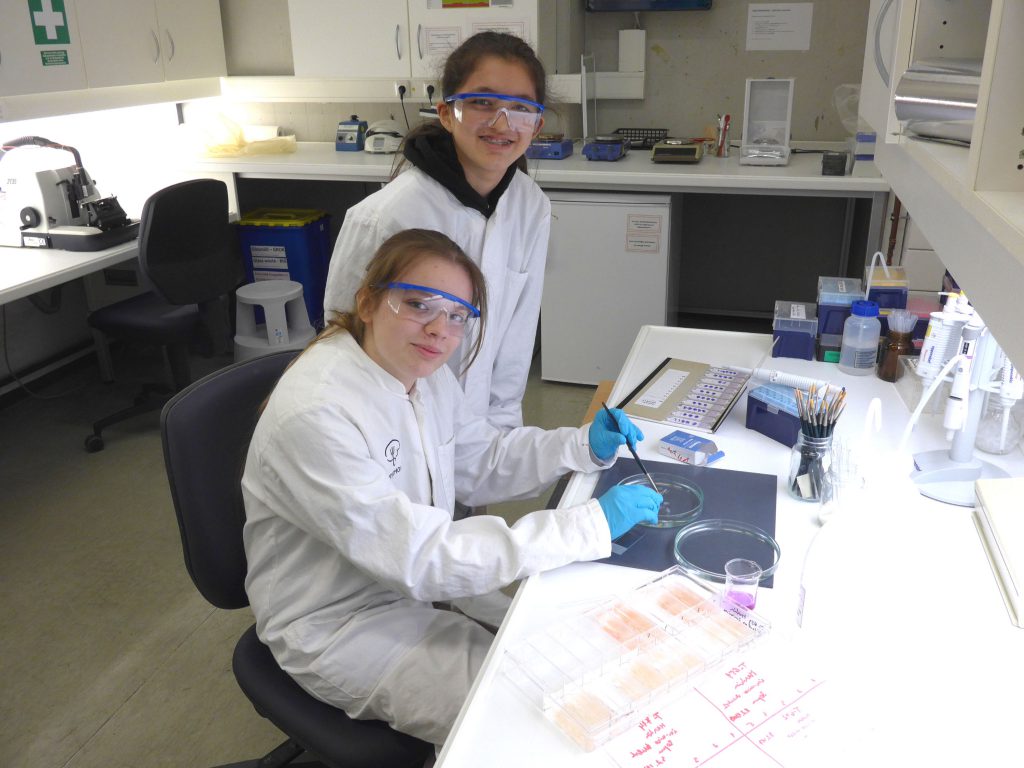
Experiment, understand and then best stay with it
In the SFB 1280's laboratory course for pupils, neuroscience becomes a living fascination
“Cognitive neuroscience – or the puzzling case of who knew too much!” is the title of the SFB 1280’s invitation to the Alfried Krupp School Laboratory at the Ruhr-Universität. School classes from secondary level II upwards can find out what thinking looks like in the EEG and what the measurements show about a person’s thoughts in exciting experiments. Registration is open, courses should be possible again from mid-February. More info at the website of the School Lab >>.
The Alfried Krupp School Lab invites you to take a look around at its wide range of activities at any time. Initiated back in 2001 by Roland Fischer together with Onur Güntürkün, spokesperson of SFB 1280, the lab now offers over 80 courses in the natural sciences and humanities. The perfect destination for a practical day out.
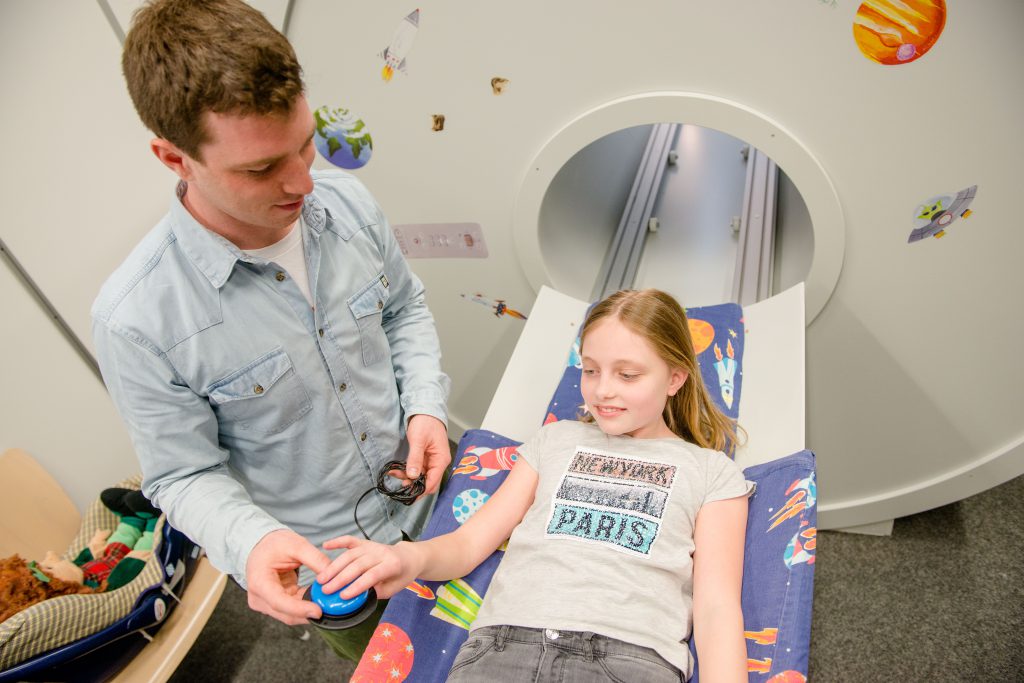
And what did you do at school today?
School classes are always welcome,
to get to know and try out the breadth of neuroscientific research methods. In project days, you can get to know university life as well as our department. Pupils get an insight into what it’s like to work as a scientist and get a first idea of what’s in store for them during their studies. Even if graduation is still a long way off, the SFB 1280 working groups would be happy to welcome pupils and their teachers for an excursion. The coordinator of the SFB 1280 is happy to receive your enquiry, preferably already with details of which areas your class might be interested in. We offer you our broad repertoire in order to jointly find a programme variant that fits your visit perfectly.
Looking for an internship?
- In the SFB 1280 there is room for a day internship: not only at one of the very different workplaces of the scientists, but also in the laboratory, in accounting, in public relations, in programming… – just talk to the coordinator >> about what might fit best.
- You can get to know the work in a researching university hospital at Essen University Hospital. The university hospital in Essen offers internships >> lasting several weeks in various areas of the hospital.
- Under the motto “Studieren Probieren” >> the RUB offers its own all-round programme for sixth form students who want to get a taste of university life without any obligation.
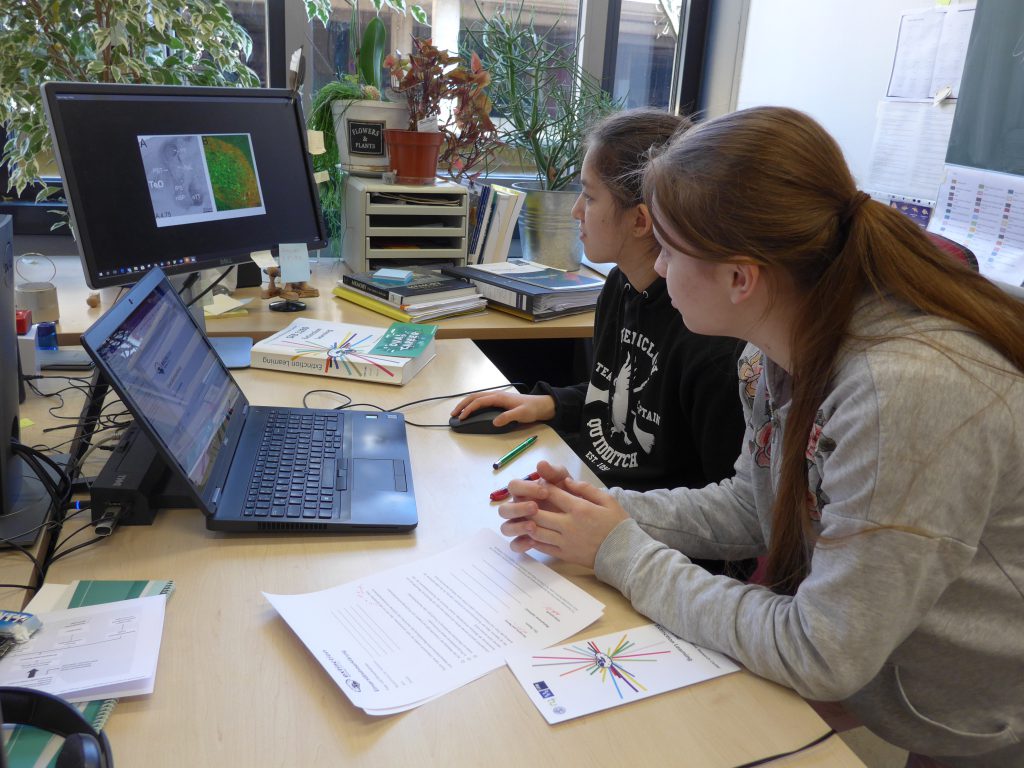

Offers for teachers
- The Blue Brain Club and Little Mr Tie >> from the Hertie Foundation. The Hertie Foundation, as the largest private sponsor of brain research, has developed two great offers to mix up lessons from primary school to grade 10. Free of charge, of course, and very well advised.
- Every summer, the RUB faculties invite you to get to know them in three turbulent days. At the Summer Campus >> there are plenty of workshops and lectures to try out your skills and interests. The neuroscience offers, with e.g. the “painting and handicrafts course” or the exercise “How does stress affect the brain”, are always a real hit.
- Looking for a topic for a biology or psychology thesis? With the SFB 1280 or SFB 874 >> you can jointly consider which of the subprojects is the most exciting environment for your ideas. – By the way: The RUB library >> helps in parallel beyond the literature search with the question of how to approach such a thesis. And particularly good papers also have a chance of winning the Dr. Hans Riegel subject prize! >>
New Year, New Me: The Facts
As the calendar turns to a new year, millions of people around the world commit to New Year’s resolutions, making promises to use the new year as a fresh beginning and an opportunity for transformation. In 2024, almost three-quarters of the British population set themselves New Year’s resolutions — that’s around 40 million people (or the entire population of Canada). This tradition was particularly strong among younger generations, with 96% of Generation Z (aged 18-27) planning resolutions, compared to just 35% of the Silent Generation (aged 79+).
Most common new years resolutions:
- Saving more money (52%)
- Eat healthier (50%)
- Exercise more (48%)
- Lose weight (37%)
- Spend more time with family/friends (35%)
How long do most resolutions normally last before being broken?
- Data from America (2016) shows that 75% of individuals maintain their resolutions through the first week.
- 64% of individuals maintain their resolutions through the first month.
- 46% of individuals in America keep their resolutions past the 6-month mark.
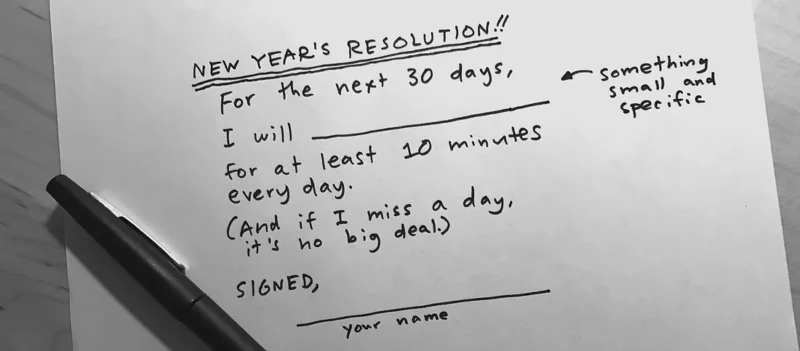
What makes resolutions stick?
Oscarsson et al. (2020) conducted research into what makes New Year’s resolutions stick. Biggest success rates depended on how people phrased their goals. Participants who set approach-oriented goals (trying to move toward or maintain a desirable outcome or state) than those with avoidance-oriented goals (trying to move toward or maintain a desirable outcome or state) were significantly more successful (58.9% vs. 47.1%) at sticking to their goals.
The study also investigates the effects of outside support. These participants received monthly follow-ups and emails with information and exercises for coping with hurdles when striving toward personal goals, and were also encouraged to set goals using the SMART technique and to set interim goals. The group that received some support was exclusively and significantly more successful compared to the groups who received a lot of support or no support at all.
Additionally, you might feel more successful if you set goals that are measurable in numbers. While success for a person striving to quit smoking or lose weight could easily be measured in the number of cigarettes smoked or body mass index, the success for a person striving to “take better care of themselves” could be highly subjective and possibly impossible to measure.
So as we enter 2026, let’s remember to work with our brain’s natural learning system: Frame your goals positively, break them into manageable steps, and celebrate small wins along the way.