A01 A02 A03 A04 A05 A06 A07 A09 A10 A11 A12 A13 A14 A18 A19 A21 F01 F02 INF Ö

IV. Berlin-Bochum Memory Alliance Meeting

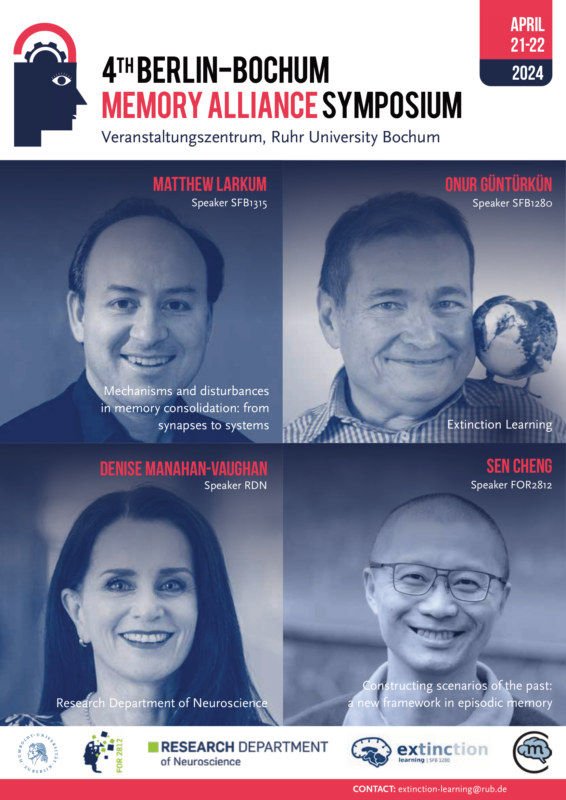
We are pleased to welcome our Berlin colleagues from the CRC 1315 “Mechanisms and Disturbances in Memory Consolidation: From Synapses to Systems” to Bochum on April 22, 2024 for the fourth Berlin-Bochum Memory Alliance Meeting. Short presentations and discussions about the work of the CRC 1280 are planned on site, as well as direct impressions from practice through laboratory visits. In the spirit of inter-university exchange, the aim is to find new (collaborative) ideas and to evaluate our own research from a different perspective through the eyes of our colleagues. We are also particularly pleased to welcome Michael Hasselmo from Boston University >> as our guest of honor.

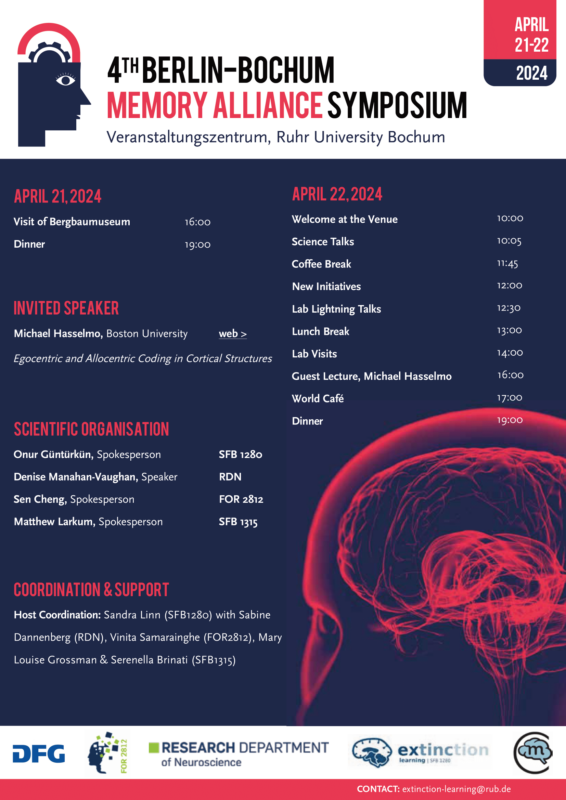
Program overview:
Program in detail:

10:00        Welcome at the venue        
10.05        Science talks, 15 + 5 Min       
        FOR 2812 – P7 –  Wicher   
        FOR 2812 – P2 – Zeng      
        SFB 1280 – A06 – Yavari    
        SFB 1280 – A07 – Herlitze 
        SFB 1280 – A10 & A12 – Elsenbruch  
11.45        Coffee       
12.00        New Initiatives, 7+3 Min        
        FOR Initiative – Axmacher       
        FOR Initiative – Rose, Pusch       
        SFB Initiative – Cheng        
12.30        Lab Lightning talks        
13.30        Lunch         
14.30        Lab visits
16:30        Guest speaker Michael Hasselmo
17.30        World Café  
19:00        Dinner

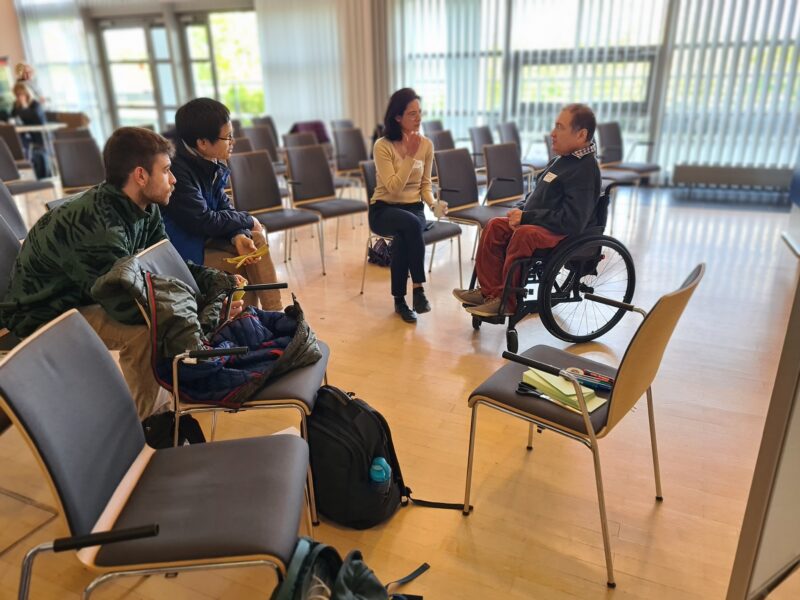
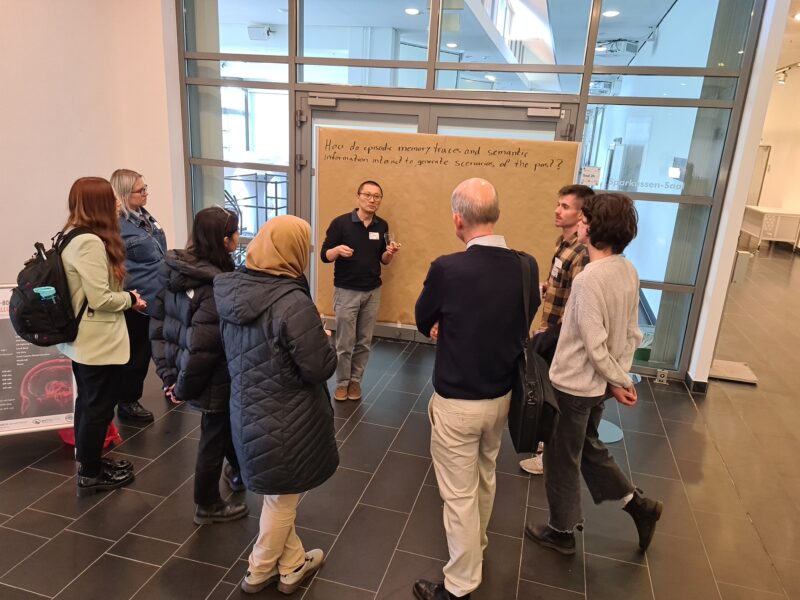
Impressions from the Symposium:
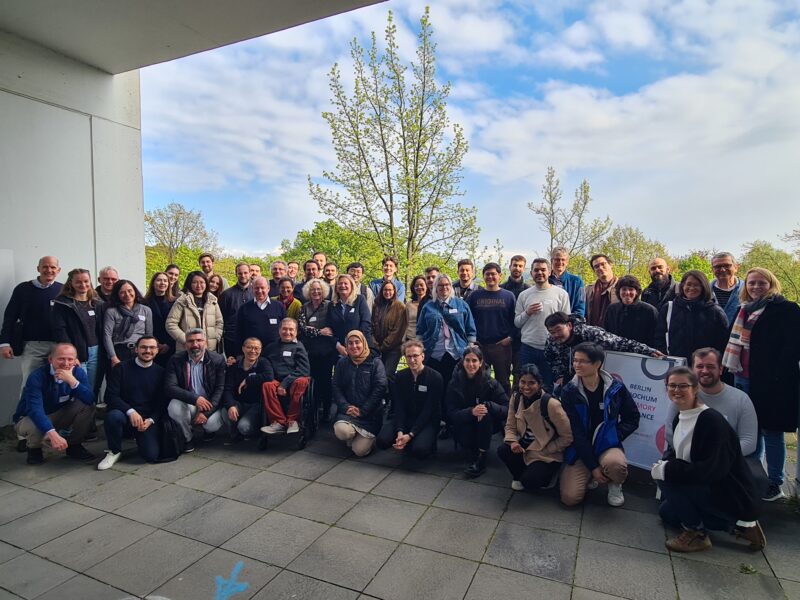
We look forward to our guests and exciting discussions.

Further information on the Berlin-Bochum Memory Alliance: >>

Further information on the Research Department of Neuroscience at the RUB: >>

Further information on the SFB 1315: >>

Further information on the IGSN: >>

Further information on the BIOME: >>

Further information on Michael Hasselmo: >>

New Year, New Me: The Facts

As the calendar turns to a new year, millions of people around the world commit to New Year’s resolutions, making promises to use the new year as a fresh beginning and an opportunity for transformation. In 2024, almost three-quarters of the British population set themselves New Year’s resolutions — that’s around 40 million people (or the entire population of Canada). This tradition was particularly strong among younger generations, with 96% of Generation Z (aged 18-27) planning resolutions, compared to just 35% of the Silent Generation (aged 79+).

Most common new years resolutions:

  1. Saving more money (52%)
  2. Eat healthier (50%)
  3. Exercise more (48%)
  4. Lose weight (37%)
  5. Spend more time with family/friends (35%)

How long do most resolutions normally last before being broken?

  • Data from America (2016) shows that 75% of individuals maintain their resolutions through the first week. 
  • 64% of individuals maintain their resolutions through the first month. 
  • 46% of individuals in America keep their resolutions past the 6-month mark.

What makes resolutions stick?

Oscarsson et al. (2020) conducted research into what makes New Year’s resolutions stick. Biggest success rates depended on how people phrased their goals. Participants who set approach-oriented goals (trying to move toward or maintain a desirable outcome or state) than those with avoidance-oriented goals (trying to move toward or maintain a desirable outcome or state) were significantly more successful (58.9% vs. 47.1%) at sticking to their goals.

The study also investigates the effects of outside support. These participants received monthly follow-ups and emails with information and exercises for coping with hurdles when striving toward personal goals, and were also encouraged to set goals using the SMART technique and to set interim goals. The group that received some support was exclusively and significantly more successful compared to the groups who received a lot of support or no support at all. 

Additionally, you might feel more successful if you set goals that are measurable in numbers. While success for a person striving to quit smoking or lose weight could easily be measured in the number of cigarettes smoked or body mass index, the success for a person striving to “take better care of themselves” could be highly subjective and possibly impossible to measure.

So as we enter 2026, let’s remember to work with our brain’s natural learning system: Frame your goals positively, break them into manageable steps, and celebrate small wins along the way.