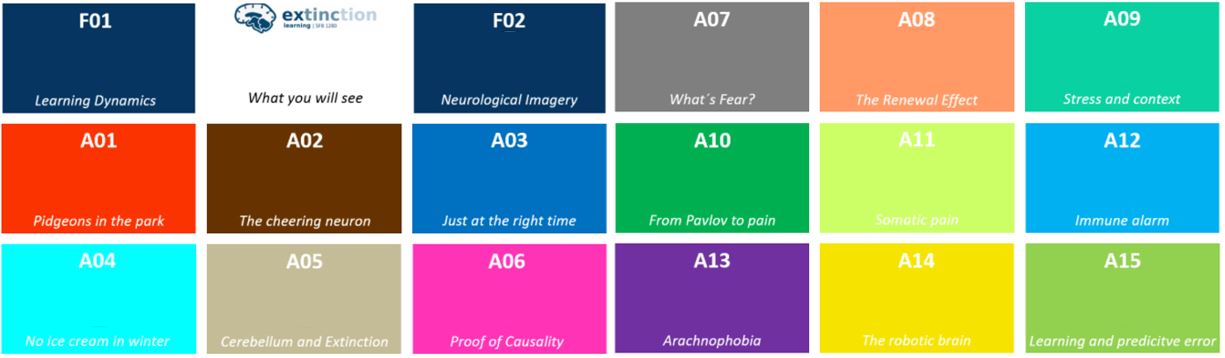
A01 A02 A04 A05 A07 A09 A10 A11 A12 A13 A14 A18 A19 A21 F01 F02 INF Ö

The magic of extinction learning. A detailed insight into the work of the SFB 1280.

The editorials of the SFB 1280 – Learn what we are working on

Article – “Don’t forget…” (Download/German)

Our editorial from 2014 about extinction learning in “forschung – Das Magazin der Deutschen Forschungsgemeinschaft”.

Article – “SFB 1280 – Extinction learning” (German)

On the occasion of the start of the Collaborative Research Centre, the spokesperson duo reports in Neuroforum, the magazine of the Neuroscience Society

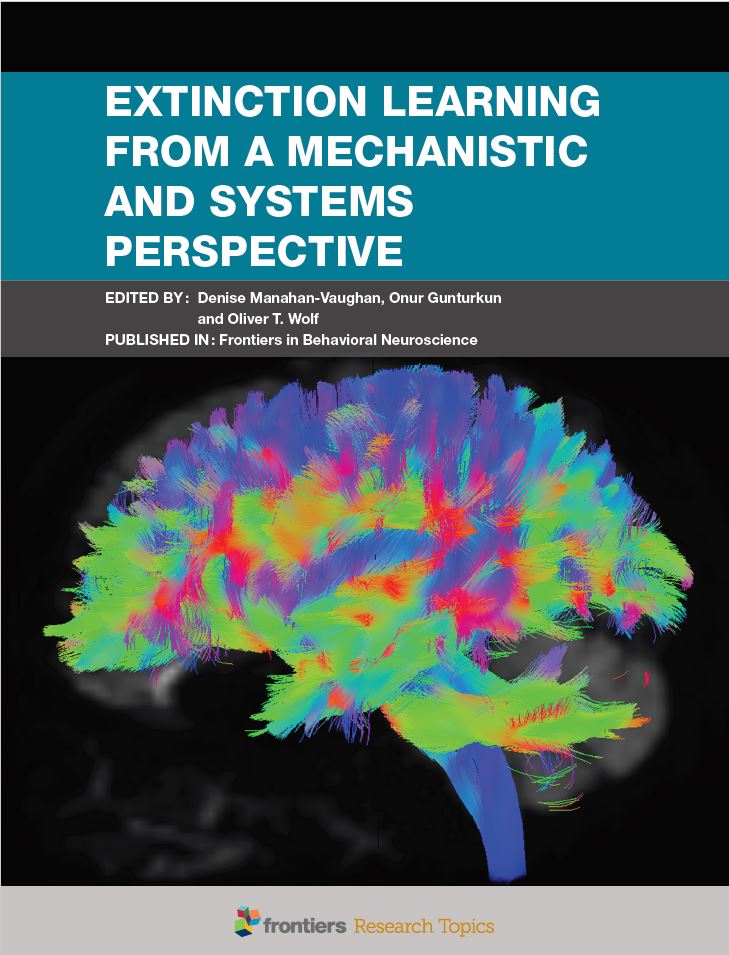
Article “Extinction learning from a mechanistic and systems perspective”.

Technical description of our research perspective on extinction learning

Audio, Video, Interactive – Stay tuned and keep learning

Animation Human 3D Brain Model

If you’ve ever wondered what a human brain looks like, you’ll find an amazing 3D journey on dasgehirn.info

Animation Brain Catalogue

And for those who wonder how similar the brain of a wolf, squirrel or rhinoceros looks, we recommend the braincatalogue

Video How do brain scans work?

EEG, fMRI and PET – you might have already heard these terms, but how do those techniques work? In this short TED-ED Episode you will find the answers.

Video Explained: Optogenetics

In the SFB 1280 we work with Optogenetics, which makes it possible to control specific neurons with light! Find out how it’s done in this short lecture from MIT. 

Video Pigeon Genius

At the SFB 1280 we hold our pigeons dear to our heart. Get a deeper insight into their remarkable skills in this short National Geographic Documentary.

Webpage What is a Collaborative Research Center?

The SFB 1280 is one of many DFG funded collaborative research centres in Germany. But what makes a SFB/CRC so special? Find out at the official Website of the Deutsche Forschungsgemeinschaft. 

SFB 1280 Vidcasts- The subprojects in brief

In the short vidcasts, the sub-projects describe their work, explain what they are researching and give an insight into how the knowledge gained can help people in the future. Each project brings its own perspective and approach to the topic of extinction learning and tries to bring forth new discoveries using a variety of methods.

All vidcasts can be found here >> and on our YouTube channel >>.

Our podcast – listen and think

Learning is hard. Forgetting is sometimes even harder. How do you get rid of what you have learned?

That’s what Rainer Holl, author, presenter and poetry slammer, wants to know and understand. To find out, he interviews scientists from the Collaborative Research Centre “Extinction Learning” about their research. Look forward to peering into the brain’s cards! Fascinating insights from the fields of psychology, biopsychology and neuroscience, a look behind the scenes of everyday scientific life and slam poetry await you.

Haven’t heard enough? Find the SFB 874 Podcast here

Kid’s Corner – Arts, Crafts and Knowledge 

Well Said – From Researchers and Thinkers

SFB 1280 Extinktionslernen Kontakt Universitäten
DFG-Förderlinie
Moodle Intern
Impressum
Datenschutz
Karte

New Year, New Me: The Facts

As the calendar turns to a new year, millions of people around the world commit to New Year’s resolutions, making promises to use the new year as a fresh beginning and an opportunity for transformation. In 2024, almost three-quarters of the British population set themselves New Year’s resolutions — that’s around 40 million people (or the entire population of Canada). This tradition was particularly strong among younger generations, with 96% of Generation Z (aged 18-27) planning resolutions, compared to just 35% of the Silent Generation (aged 79+).

Most common new years resolutions:

  1. Saving more money (52%)
  2. Eat healthier (50%)
  3. Exercise more (48%)
  4. Lose weight (37%)
  5. Spend more time with family/friends (35%)

How long do most resolutions normally last before being broken?

  • Data from America (2016) shows that 75% of individuals maintain their resolutions through the first week. 
  • 64% of individuals maintain their resolutions through the first month. 
  • 46% of individuals in America keep their resolutions past the 6-month mark.

What makes resolutions stick?

Oscarsson et al. (2020) conducted research into what makes New Year’s resolutions stick. Biggest success rates depended on how people phrased their goals. Participants who set approach-oriented goals (trying to move toward or maintain a desirable outcome or state) than those with avoidance-oriented goals (trying to move toward or maintain a desirable outcome or state) were significantly more successful (58.9% vs. 47.1%) at sticking to their goals.

The study also investigates the effects of outside support. These participants received monthly follow-ups and emails with information and exercises for coping with hurdles when striving toward personal goals, and were also encouraged to set goals using the SMART technique and to set interim goals. The group that received some support was exclusively and significantly more successful compared to the groups who received a lot of support or no support at all. 

Additionally, you might feel more successful if you set goals that are measurable in numbers. While success for a person striving to quit smoking or lose weight could easily be measured in the number of cigarettes smoked or body mass index, the success for a person striving to “take better care of themselves” could be highly subjective and possibly impossible to measure.

So as we enter 2026, let’s remember to work with our brain’s natural learning system: Frame your goals positively, break them into manageable steps, and celebrate small wins along the way.